Техническая документация
Характеристики
Brand
RS ProТип продукции
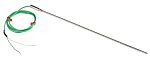
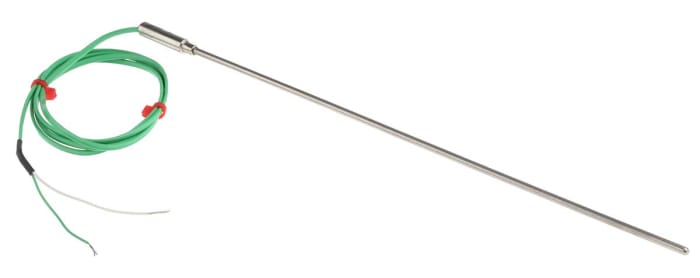
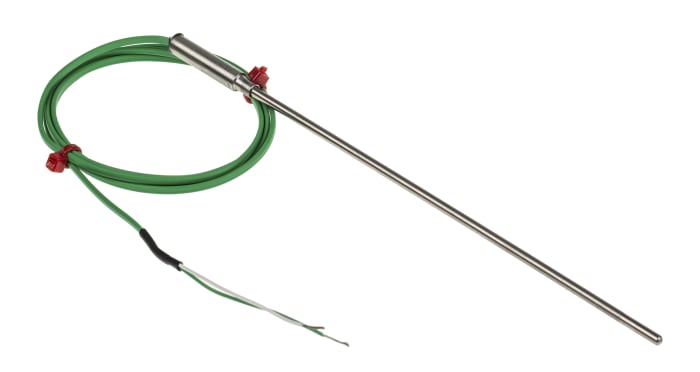
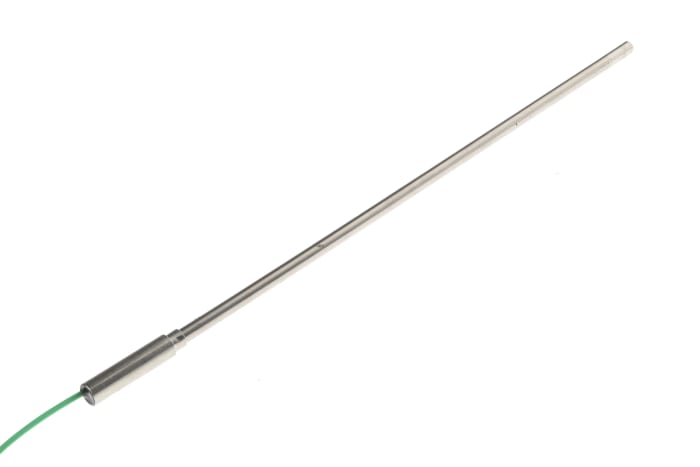
Термопара с минеральной изоляцией
Тип термопары
K
Диаметр щупа
3мм
Длина щупа
250мм
Максимальная считываемая температура
1100°C
Материал щупа
Нержавеющая сталь
Длина кабеля
1м
Стандарты/одобрения
IEC, RoHS Compliant
Страна происхождения
United Kingdom
Информация о товаре
From RS Pro a range of type K thermocouple temperature sensors that conform to IEC 584 standards with class 1 tolerance for optimum accuracy. These sensors or probes have a durable construction and feature a stainless steel 310 probe sheath and a PFA insulated lead. The mineral insulated flexible probe sheath can be bent and formed to suit a wide range of applications. The thermocouple has a single element insulated hot junction for a reduction in electrical interference and a plain pot seal with a temperature rating of 200°C.
A thermocouple is a sensor used to measure temperature in a range of different processes and consists of two wire legs made from different metals joined together at their two ends to form two junctions. The hot, or measuring junction is connected to the body whose temperature is going to be measured. The cold junction or reference junction is connected to a body of known temperature. When the measuring junction is placed on something hot a voltage or potential difference between this and the reference junction occurs. This voltage can then be converted into a temperature measurement using thermocouple reference tables. This process is also known as the Seebeck Effect
Mineral insulation is used to insulate the thermocouple wires from one another and from the metal probe sheath that surrounds them. The sheath is filled with a highly compacted magnesium oxide powder that prevents the conductors from making contact with one another other than at the fixed junction. The high density of the mineral powder enables the thermocouple to have a rapid response as it promotes a fast heat transfer between the conductor and the sheath. Mineral insulation also helps to protect the thermocouple wire from environmental damage including corrosion, prevents electrical interference and allows the cable to be flexible whilst maintaining its mechanical strength
Type K Thermocouples (Nickel-Chromium / Nickel-Aluminium) are the most common type of thermocouple and are both accurate and flexible with a wide temperature range. Typical applications for these mineral insulated Type-K thermocouple probes include heat exchangers, power stations, brick and cement kilns, heat treatment and annealing furnaces, thermostats, food thermometers, vehicle diagnostics and in laboratories. These thermocouples are particularly suitable for high pressure and vacuum applications, and able to withstand high levels of vibration.
Pot seal maximum temperature is limited to 180°C


Информация о наличии не успела загрузиться
тг 11 537,07
тг 11 537,07 Each (ex VAT)
1
тг 11 537,07
тг 11 537,07 Each (ex VAT)
Информация о наличии не успела загрузиться
1
| Количество | Цена единицы |
|---|---|
| 1 - 9 | тг 11 537,07 |
| 10 - 19 | тг 10 844,22 |
| 20+ | тг 10 383,81 |
Техническая документация
Характеристики
Brand
RS ProТип продукции
Термопара с минеральной изоляцией
Тип термопары
K
Диаметр щупа
3мм
Длина щупа
250мм
Максимальная считываемая температура
1100°C
Материал щупа
Нержавеющая сталь
Длина кабеля
1м
Стандарты/одобрения
IEC, RoHS Compliant
Страна происхождения
United Kingdom
Информация о товаре
From RS Pro a range of type K thermocouple temperature sensors that conform to IEC 584 standards with class 1 tolerance for optimum accuracy. These sensors or probes have a durable construction and feature a stainless steel 310 probe sheath and a PFA insulated lead. The mineral insulated flexible probe sheath can be bent and formed to suit a wide range of applications. The thermocouple has a single element insulated hot junction for a reduction in electrical interference and a plain pot seal with a temperature rating of 200°C.
A thermocouple is a sensor used to measure temperature in a range of different processes and consists of two wire legs made from different metals joined together at their two ends to form two junctions. The hot, or measuring junction is connected to the body whose temperature is going to be measured. The cold junction or reference junction is connected to a body of known temperature. When the measuring junction is placed on something hot a voltage or potential difference between this and the reference junction occurs. This voltage can then be converted into a temperature measurement using thermocouple reference tables. This process is also known as the Seebeck Effect
Mineral insulation is used to insulate the thermocouple wires from one another and from the metal probe sheath that surrounds them. The sheath is filled with a highly compacted magnesium oxide powder that prevents the conductors from making contact with one another other than at the fixed junction. The high density of the mineral powder enables the thermocouple to have a rapid response as it promotes a fast heat transfer between the conductor and the sheath. Mineral insulation also helps to protect the thermocouple wire from environmental damage including corrosion, prevents electrical interference and allows the cable to be flexible whilst maintaining its mechanical strength
Type K Thermocouples (Nickel-Chromium / Nickel-Aluminium) are the most common type of thermocouple and are both accurate and flexible with a wide temperature range. Typical applications for these mineral insulated Type-K thermocouple probes include heat exchangers, power stations, brick and cement kilns, heat treatment and annealing furnaces, thermostats, food thermometers, vehicle diagnostics and in laboratories. These thermocouples are particularly suitable for high pressure and vacuum applications, and able to withstand high levels of vibration.
Pot seal maximum temperature is limited to 180°C