Техническая документация
Характеристики
Brand
RS ProТип продукции
Свинцовый припой
Диаметр провода
0.8мм
Процент свинца
40%
Форма изделия
Проволока
Точка плавления
188°C
Процент олова
60%
Вес изделия
18g
Стандарты/одобрения
Нет
Страна происхождения
United States
Информация о товаре
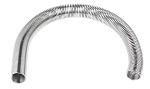
A resin based solder containing 60/40 Tin Lead. The flux formulation of this solder wire is ideal for wetting common Printed Circuit Boards (PCBs) and any components as it leaves behind a clear residue that can be easily removed with dry brushing for a cleaner look or safely left on the PCB after soldering.
Warning: The presence of lead makes this solder unsuitable for soldering RoHS compliant products.
Solder is used alongside soldering irons, particularly in securing electrical components to integrated circuit boards. The solder melts easily when heated, and cools quickly, meaning it can be moulded to secure components in place in solder joints. The quick setting nature of solder means it can also be used for light brazing.;Because of its relatively low melting point, solder can be reworked easily by heating it to melting point and using a solder sucker to remove it.;Solder is commonly used with SMD and through-hole components, with applications in repair, prototyping and production.
Lead-free solder is generally regarded as having a more positive environmental impact than leaded solder, and also as being safer for human use. However, lead-free solder also has potential production advantages. Lead-free solder can offer better lead spacing, which makes it more suitable for high-density components where pitches are tight. This means potentially better performance where space saving is a concern.;The advantages of lead solder are that it has a lower melting point, which is sometimes preferable for hand working components. Also, lower working temperatures reduces the risk of damage to components and circuit board.;Unlike lead-free solder, lead solder does not have a shelf-life and is less prone to losing quality after prolonged exposure to oxygen. However, many electronic application requirements exclude the use of lead solder, due to the toxicity of lead.
Looking to reduce costs but keep the same quality?
With a choice of over 65,000 products – all of which are rigorously tested against demanding industry standards before they are given the RS PRO seal of approval.
Trusted by engineers the world over, we want you to be confident that youre receiving the exceptional quality, reliability and the best value for money.
Информация о наличии не успела загрузиться
тг 2 024,91
тг 2 024,91 Each (ex VAT)
1
тг 2 024,91
тг 2 024,91 Each (ex VAT)
Информация о наличии не успела загрузиться
1
| Количество | Цена единицы |
|---|---|
| 1 - 9 | тг 2 024,91 |
| 10 - 19 | тг 1 926,57 |
| 20 - 49 | тг 1 783,53 |
| 50+ | тг 1 622,61 |
Техническая документация
Характеристики
Brand
RS ProТип продукции
Свинцовый припой
Диаметр провода
0.8мм
Процент свинца
40%
Форма изделия
Проволока
Точка плавления
188°C
Процент олова
60%
Вес изделия
18g
Стандарты/одобрения
Нет
Страна происхождения
United States
Информация о товаре
A resin based solder containing 60/40 Tin Lead. The flux formulation of this solder wire is ideal for wetting common Printed Circuit Boards (PCBs) and any components as it leaves behind a clear residue that can be easily removed with dry brushing for a cleaner look or safely left on the PCB after soldering.
Warning: The presence of lead makes this solder unsuitable for soldering RoHS compliant products.
Solder is used alongside soldering irons, particularly in securing electrical components to integrated circuit boards. The solder melts easily when heated, and cools quickly, meaning it can be moulded to secure components in place in solder joints. The quick setting nature of solder means it can also be used for light brazing.;Because of its relatively low melting point, solder can be reworked easily by heating it to melting point and using a solder sucker to remove it.;Solder is commonly used with SMD and through-hole components, with applications in repair, prototyping and production.
Lead-free solder is generally regarded as having a more positive environmental impact than leaded solder, and also as being safer for human use. However, lead-free solder also has potential production advantages. Lead-free solder can offer better lead spacing, which makes it more suitable for high-density components where pitches are tight. This means potentially better performance where space saving is a concern.;The advantages of lead solder are that it has a lower melting point, which is sometimes preferable for hand working components. Also, lower working temperatures reduces the risk of damage to components and circuit board.;Unlike lead-free solder, lead solder does not have a shelf-life and is less prone to losing quality after prolonged exposure to oxygen. However, many electronic application requirements exclude the use of lead solder, due to the toxicity of lead.
Looking to reduce costs but keep the same quality?
With a choice of over 65,000 products – all of which are rigorously tested against demanding industry standards before they are given the RS PRO seal of approval.
Trusted by engineers the world over, we want you to be confident that youre receiving the exceptional quality, reliability and the best value for money.