Техническая документация
Характеристики
Brand
RS ProТип выхода датчика
PT100
Тип продукции
Терморезисторный датчик
Длина щупа
250мм
Диаметр щупа
3мм
Минимальная считываемая температура
-50°C
Максимальная считываемая температура
250°C
Тип оконцовки
Bare Wire Tail
Длина кабеля
1м
Материал щупа
Нержавеющая сталь
Сертификация опасной зоны
Нет
Количество проводов
4
Точность
Class B
Страна происхождения
United Kingdom
Информация о товаре
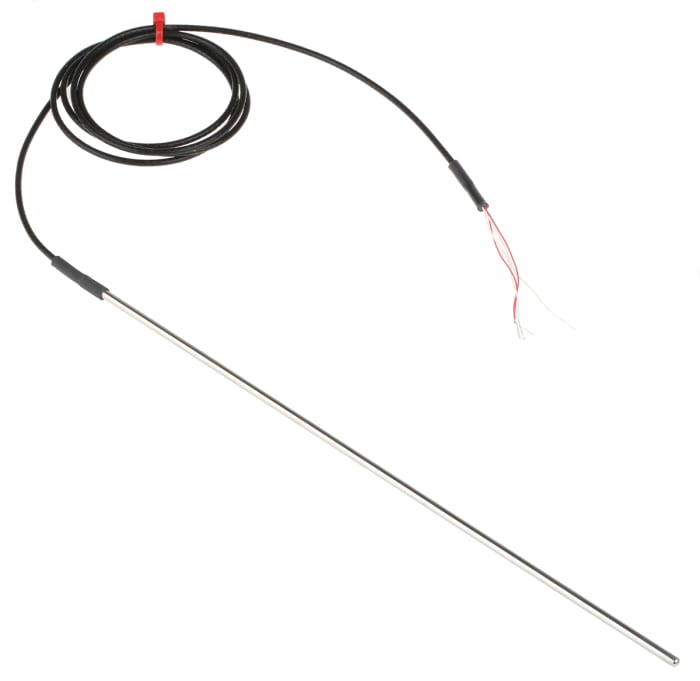
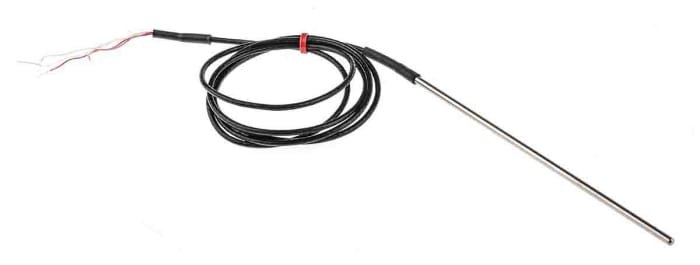
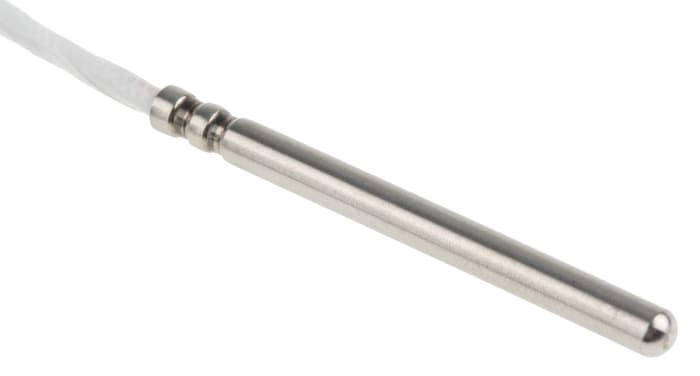
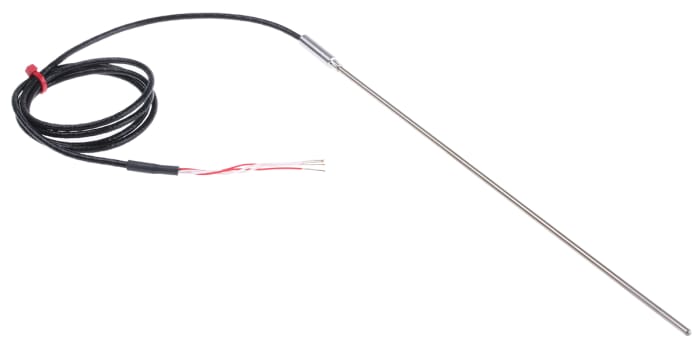
From RS Pro a high-quality and reliable Pt100 PRT (Platinum Resistance Thermometer) or RTD (Resistance Temperature Detector) sensing probe. This RTD probe has a robust construction with the sensing element encased in a rigid 316 stainless steel sheath. The leads have a durable and flexible Teflon insulation and are screened for protection against electromagnetic interference. This platinum resistance thermometer provides accurate and reliable temperature measurement for a wide range of applications.
An RTD is a type of temperature sensor based on the correlation between metals and temperature. As the temperature of a metal increases so does its resistance to the flow of electricity. This resistance can be measured and converted to a temperature reading. In a Pt100 RTD Pt stands for platinum (platinum wire or film) and 100 means that the temperature sensor has a resistance of 100 Ohms at 0°C. Platinum is the most reliable metal due to its linear resistance to temperature relationship over a large temperature range.
A Pt100 probe is the most rugged form of RTD. The Pt100 temperature sensor element is mounted inside a metal sheath or probe. This protects it from being damaged by the surrounding environment when it is inserted into the process to be measured. The other end of the probe is terminated by an insulated lead comprising of 4 wire tails which are connected to the temperature measuring equipment.
These Pt100 PRT sensor probes with their robust design are ideal for use in many general purpose industrial applications including the following:
The PRT temperature sensor works by placing the sensor element (or process end) into the equipment or process that requires temperature measurement. As the temperature of the platinum resistance thermometer increases its resistance to the flow of electricity increases. For every increase per degree of temperature the electrical resistance also changes by a set ratio, this is called the temperature coefficient. For platinum, this ratio is .00385 ohm/ohm/°C which means for a Pt100 with a 100 ohm resistance the increase in resistance per degree of temperature would be 0.385 ohms. The total resistance reading can, therefore, be measured and converted into temperature.
The resistance generated by the temperature sensor is measured by passing current through one of the wires to produce a voltage. This voltage is then measured using a suitable bridge or voltmeter and the resistance calculated in ohms using Ohms Law (R=V/I). Once the resistance is known you can convert it to a temperature reading using a calibration equation or a Pt100 table. A temperature measurement device or calibrator can also be connected to the leads of the probe that will automatically convert the measured resistance into a temperature reading.

Информация о наличии не успела загрузиться
тг 20 539,65
тг 20 539,65 Each (ex VAT)
1
тг 20 539,65
тг 20 539,65 Each (ex VAT)
Информация о наличии не успела загрузиться
1
| Количество | Цена единицы |
|---|---|
| 1 - 9 | тг 20 539,65 |
| 10 - 19 | тг 19 305,93 |
| 20+ | тг 18 483,45 |
Техническая документация
Характеристики
Brand
RS ProТип выхода датчика
PT100
Тип продукции
Терморезисторный датчик
Длина щупа
250мм
Диаметр щупа
3мм
Минимальная считываемая температура
-50°C
Максимальная считываемая температура
250°C
Тип оконцовки
Bare Wire Tail
Длина кабеля
1м
Материал щупа
Нержавеющая сталь
Сертификация опасной зоны
Нет
Количество проводов
4
Точность
Class B
Страна происхождения
United Kingdom
Информация о товаре
From RS Pro a high-quality and reliable Pt100 PRT (Platinum Resistance Thermometer) or RTD (Resistance Temperature Detector) sensing probe. This RTD probe has a robust construction with the sensing element encased in a rigid 316 stainless steel sheath. The leads have a durable and flexible Teflon insulation and are screened for protection against electromagnetic interference. This platinum resistance thermometer provides accurate and reliable temperature measurement for a wide range of applications.
An RTD is a type of temperature sensor based on the correlation between metals and temperature. As the temperature of a metal increases so does its resistance to the flow of electricity. This resistance can be measured and converted to a temperature reading. In a Pt100 RTD Pt stands for platinum (platinum wire or film) and 100 means that the temperature sensor has a resistance of 100 Ohms at 0°C. Platinum is the most reliable metal due to its linear resistance to temperature relationship over a large temperature range.
A Pt100 probe is the most rugged form of RTD. The Pt100 temperature sensor element is mounted inside a metal sheath or probe. This protects it from being damaged by the surrounding environment when it is inserted into the process to be measured. The other end of the probe is terminated by an insulated lead comprising of 4 wire tails which are connected to the temperature measuring equipment.
These Pt100 PRT sensor probes with their robust design are ideal for use in many general purpose industrial applications including the following:
The PRT temperature sensor works by placing the sensor element (or process end) into the equipment or process that requires temperature measurement. As the temperature of the platinum resistance thermometer increases its resistance to the flow of electricity increases. For every increase per degree of temperature the electrical resistance also changes by a set ratio, this is called the temperature coefficient. For platinum, this ratio is .00385 ohm/ohm/°C which means for a Pt100 with a 100 ohm resistance the increase in resistance per degree of temperature would be 0.385 ohms. The total resistance reading can, therefore, be measured and converted into temperature.
The resistance generated by the temperature sensor is measured by passing current through one of the wires to produce a voltage. This voltage is then measured using a suitable bridge or voltmeter and the resistance calculated in ohms using Ohms Law (R=V/I). Once the resistance is known you can convert it to a temperature reading using a calibration equation or a Pt100 table. A temperature measurement device or calibrator can also be connected to the leads of the probe that will automatically convert the measured resistance into a temperature reading.